Tuesday, July 12, 2022

History of a Bedroom


In larger Victorian houses it was common to have accessible from the bedroom a boudoir for the lady of the house and a dressing room for the gentleman. Attic bedrooms exist in some houses; since they are only separated from the outside air by the roof they are typically cold in winter and may be too hot in summer. The slope of the rafters supporting a pitched roof also makes them inconvenient. In houses where servants were living in they often used attic bedrooms.

In the 14th century the lower class slept on mattresses that were stuffed with hay and broom straws. During the 16th century mattresses stuffed with feathers started to gain popularity, with those who could afford them. The common person was doing well if he could buy a mattress after seven years of marriage. In the 18th century cotton and wool started to become more common. The first coil spring mattress was not invented until 1871. The most common and most purchased mattress is the innerspring mattress, though a wide variety of alternative materials are available including foam, latex, wool, and even silk. The variety of firmness choices range from relatively soft to a rather firm mattress. A bedroom may have bunk beds if two or more people share a room. A chamber pot kept under the bed or in a nightstand was usual in the period before modern domestic plumbing and bathrooms in dwellings.

Read more, here.

LOCATION
395 E. Monte Vista Avenue
Suite A
Vacaville, CA 95688

CONTACT
707-449-6385

Saturday, July 9, 2022

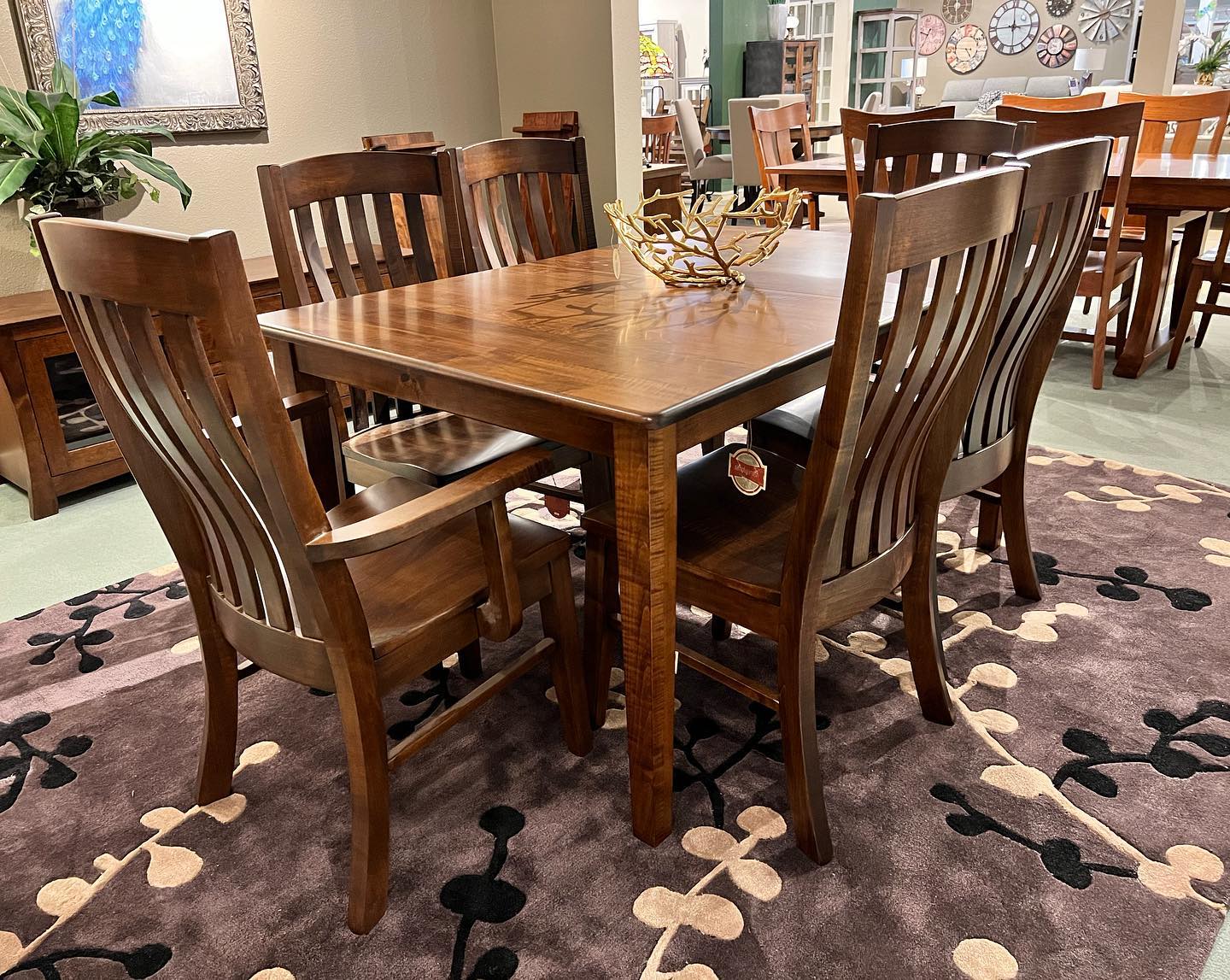
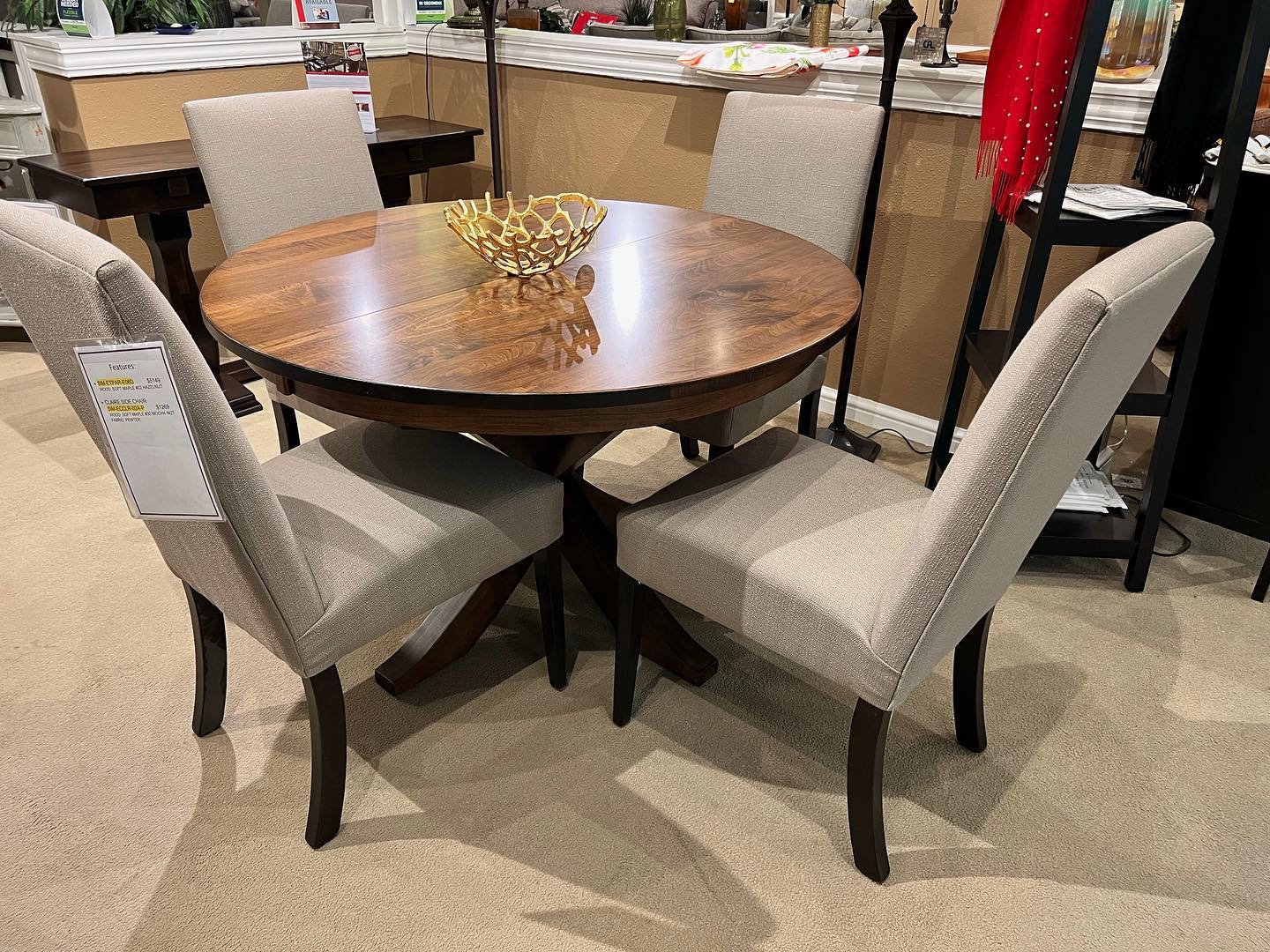
Shape, Height, and Function of Dining Tables

Tables come in a wide variety of materials, shapes, and heights dependent upon their origin, style, intended use and cost. Many tables are made of wood or wood-based products; some are made of other materials including metal and glass. Most tables are composed of a flat surface and one or more supports (legs). A table with a single, central foot is a pedestal table. Long tables often have extra legs for support.

Table tops can be in virtually any shape, although rectangular, square, round (e.g. the round table), and oval tops are the most frequent. Others have higher surfaces for personal use while either standing or sitting on a tall stool.

Many tables have tops that can be adjusted to change their height, position, shape, or size, either with foldable, sliding or extensions parts that can alter the shape of the top. Some tables are entirely foldable for easy transportation, e.g. camping or storage, e.g., TV trays. Small tables in trains and aircraft may be fixed or foldable, although they are sometimes considered as simply convenient shelves rather than tables.

Tables can be freestanding or designed for placement against a wall. Tables designed to be placed against a wall are known as Pier tables or console tables (French: console, "support bracket") and may be bracket-mounted (traditionally), like a shelf, or have legs, which sometimes imitate the look of a bracket-mounted table.

Read more, here.

LOCATION
395 E. Monte Vista Avenue
Suite A
Vacaville, CA 95688

CONTACT
707-449-6385

Wednesday, July 6, 2022

The Loft II Bedroom Collection by Simply Amish - Lainey's Furniture


Jennifer shows the great Loft II bedroom set from Amish Furniture.

LOCATION
395 E. Monte Vista Avenue
Suite A
Vacaville, CA 95688

CONTACT
707-449-6385

Sunday, July 3, 2022

History of Tables

Some very early tables were made and used by the Ancient Egyptians around 2500 BC, using wood and alabaster. They were often little more than stone platforms used to keep objects off the floor, though a few examples of wooden tables have been found in tombs. Food and drinks were usually put on large plates deposed on a pedestal for eating. The Egyptians made use of various small tables and elevated playing boards. The Chinese also created very early tables in order to pursue the arts of writing and painting, as did people in Mesopotamia, where various metals were used.

The Greeks and Romans made more frequent use of tables, notably for eating, although Greek tables were pushed under a bed after use. The Greeks invented a piece of furniture very similar to the guéridon. Tables were made of marble or wood and metal (typically bronze or silver alloys), sometimes with richly ornate legs. Later, the larger rectangular tables were made of separate platforms and pillars. The Romans also introduced a large, semicircular table to Italy, the mensa lunata.

Furniture during the Middle Ages is not as well known as that of earlier or later periods, and most sources show the types used by the nobility. In the Eastern Roman Empire, tables were made of metal or wood, usually with four feet and frequently linked by x-shaped stretchers. Tables for eating were large and often round or semicircular. A combination of a small round table and a lectern seemed very popular as a writing table.[6] In western Europe, the invasions and internecine wars caused most of the knowledge inherited from the classical era to be lost. As a result of the necessary movability, most tables were simple trestle tables, although small round tables made from joinery reappeared during the 15th century and onward. In the Gothic era, the chest became widespread and was often used as a table.

Refectory tables first appeared at least as early as the 17th century, as an advancement of the trestle table; these tables were typically quite long and wide and capable of supporting a sizeable banquet in the great hall or other reception room of a castle.

Read more, here.

LOCATION
395 E. Monte Vista Avenue
Suite A
Vacaville, CA 95688

CONTACT
707-449-6385

Thursday, June 30, 2022

Monday, June 27, 2022

Custom Designed Dining Room Tables - Simply Amish - Lainey's Furniture


Jennifer with Lainey's Furniture  shows the custom design studio from Simply Amish.  Create your own unique dining room table with quality that lasts a lifetime.

LOCATION
395 E. Monte Vista Avenue
Suite A
Vacaville, CA 95688

CONTACT
707-449-6385

Friday, June 24, 2022

History of the Dining Room


In the Middle Ages, upper-class Britons and other European nobility in castles or large manor houses dined in the great hall. This was a large multi-function room capable of seating the bulk of the population of the house. The family would sit at the head table on a raised dais, with the rest of the population arrayed in order of diminishing rank away from them. Tables in the great hall would tend to be long trestle tables with benches. The sheer number of people in a Great Hall meant it would probably have had a busy, bustling atmosphere. Suggestions that it would also have been quite smelly and smoky are probably, by the standards of the time, unfounded. These rooms had large chimneys and high ceilings and there would have been a free flow of air through the numerous door and window openings.

It is true that the owners of such properties began to develop a taste for more intimate gatherings in smaller 'parlers' or 'privee parlers' off the main hall but this is thought to be due as much to political and social changes as to the greater comfort afforded by such rooms. Over time, the nobility took more of their meals in the parlour, and the parlour became, functionally, a dining room (or was split into two separate rooms). It also migrated farther from the Great Hall, often accessed via grand ceremonial staircases from the dais in the Great Hall. Eventually dining in the Great Hall became something that was done primarily on special occasions.

Towards the beginning of the 18th century, a pattern emerged where the ladies of the house would withdraw after dinner from the dining room to the drawing room. The gentlemen would remain in the dining room having drinks. The dining room tended to take on a more masculine tenor as a result.

In the 1930s and 40s, dining rooms continued to be separate from kitchens even as servant's rooms became less common in middle-class houses. In the 1950s and 60s, dining and kitchen areas were merged, and living rooms were merged with the kitchen-dining rooms.

During the COVID-19 pandemic, dining rooms that still existed were used as home offices or classrooms and were valuable for their seclusion.

Read more, here.

LOCATION
395 E. Monte Vista Avenue
Suite A
Vacaville, CA 95688

CONTACT
707-449-6385